बुधवार, 11 जुलाई 2018

If polio is near extinction, why do outbreaks still pop up in places where the disease was thought to be long gone? The answer is complicated.(HINDI)

भले ही पोलियो का विषाणु अब खुलकर अपनी लीला नहीं दिखा पा रहा है इसे नकेल डालने के साथ -साथ १९८८ ईसवी सन में ही भूमंडलीय स्तर पर निजी एवं सार्वजनकि प्रयासों  की परस्पर भागेदारी के साथ काबू कर लिया गया था लेकिन तो भी यह यदा -कदा  यहां -वहां अपना सर उठाता दिखाई देता है मानो कह रहा हो 'मैं यहां  हूँ  यहां  '. 

इसका संभावित कारण भी मुख से दी जाने वाली ओरल पोलियो ड्रॉप्स में मौजूद है -पोलियो वायरस की इस लाइव स्ट्रेन में अपना रूप और खोल बदल के बहरूपिया भेष धर छुट्टा घूमने की क्षमता है। इसे ही विषाणु का म्यूटेट करना कहते हैं  चिकित्सा शब्दावली में। एचआईवी -एड्स वायरस के साथ भी यही दिक्कत है। 

वेक्सीन से  व्युत्पन्न वायरस (Vaccine derived polio virus )ही यहां वहां मुँह उठाये फिरते हैं। 

प्रजातांत्रिक काँगो गणराज्य के दूरदराज़ के इलाकों में ,पापुआ न्यू -गिनी में इसी का खुला खेल फरुख्खाबादी ज़ारी है। सीरिया में भी इसने एक बार फिर अपना सर उठाया है यद्यपि सन २०००  में ही न्यू -गिनी को पोलियो मुक्त इलाका मान लिया गया था। 

पोलियो के लक्षणों में थकान और सर दर्द के अलावा असरग्रस्त व्यक्ति को ज्वरग्रस्त और मतली आने की शिकायत करते भी देखा जाता है। 

उसकी गर्दन में अकड़ाव ,हाथ पैरों में हड़कन (पीड़ा )और  इससे  असरग्रस्त कुछ और लोगों में कभी कभार फालिज(लकवा ग्रस्त भी देखे गए हैं कुछ लोग ) भी देखा जाता है जिससे निजात मिलना असम्भव रहता है।
पोलियो ओरल वेक्सीन के अलावा वर्तमान में इस मर्ज़ का कोई और इलाज़ अभी नहीं है और पोलियो ड्रॉप्स से सौ फीसद बचाव हो ही जाए इसका कोई निश्चय भी नहीं हो पा रहा है। 
बारहा पोलियो ड्रॉप्स दिए जाने की यही वजहें रहीं हैं। लोगों को इसे बूझना समझना चाहिए इसमें उनका ही भला है। भारत जैसे देशों में तो कभी कभार वैक्सीनों के खिलाफ दुष्प्रचार भी देखा जाता है। महज़ अविद्या अधूरा ज्ञान ही इसके लिए उत्तरदाई कहा जाएगा। 
पाकिस्तान ,अफगानिस्तान और नाइजीरिया अभी भी इसे काबू करने में मशगूल हैं वहां इसका खेल चल रहा है। हालांकि वेक्सीन वहां इसके पीछे लग चुकी है। खुला खेल फरुख्खाबादी तो अब नहीं ही चलेगा। 
हारिये  न हिम्मत बिसारिये न राम -एक दिन ये पोलियो वायरस भी सलाम कहेगा। लेट पीस बे अपॉन यु -अस्स- स- लामवालेकम। 

जब तक इसका खुला खेल बंद नहीं होता वर्तमान प्रयासों में किसी भी प्रकार की ढील नहीं दी जानी चाहिए। तब ही पोलियो वेक्सीन से पैदा वायरस को लगाम लगाई जा सकेगी। भूमंडलीय स्तर पर इसके चलन को विराम दिया जा सकेगा। कमी हमारे टीकाकरण प्रयासों में ही रह जाती है। जन -जन, जन- मन, हर- जन तक पोलियो ड्रॉप्स पहुंचे तो सही फिर देखिये विषाणु से व्युतपन्न वायरस भी दुम दबाके भागता है या नहीं। 

अमरीका जैसा विकसित राज्य यद्यपि इस पोलियो वायरस  की मृत स्ट्रेन इस्तेमाल करता रहा है लेकिन यहां भी पूर्ण सुरक्षा नहीं है। असरग्रस्त व्यक्ति से दूसरे व्यक्ति तक तो भी इसका सम्प्रेषण बहुबिध हो ही सकता है। भले स्वयं उसे इसका इल्म न हो लेकिन वह वाहक -संप्रेषक या वेक्टर बना रहता है पोलियो वायरस का.ये तो वही बात हुई -हम तो सुरक्षित रहेंगे सनम तुम्हें ले डूबेंगे। बच सकते हो तो बचो। 

(CNN)If polio is near extinction, why do outbreaks still pop up in places where the disease was thought to be long gone? The answer is complicated.
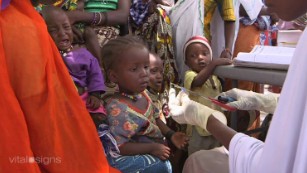
If polio is near extinction, why do outbreaks still pop up in places where the disease was thought to be long gone? The answer is complicated.

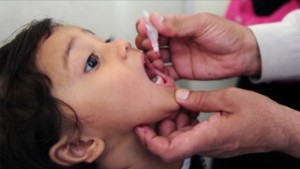
Global efforts to destroy disease-causing polioviruses have been quite a success story. Cases caused by the wild poliovirus have dropped 99% since 1988, thanks to vaccination efforts and a public-private partnership launched that year called the Global Polio Eradication Initiative.
Yet some immunization efforts carry the very rare risk of causing polioviruses to circulate in areas where many people might not yet be vaccinated or areas that were poorly vaccinated -- an event that could lead to new cases of disease while trying to demolish it.
    It turns out that live strains of poliovirus that are used in the oral poliovirus vaccine can mutate, spread and, in rare cases, even trigger an outbreak, representing a catch-22 in ongoing polio eradication endeavors.
    These vaccine-derived viruses continue to haunt certain regions of the world.

    'We cannot stop our efforts now'

    "Why do we see outbreaks? First, we need to make a distinction between the wild poliovirus -- which is the virus we're trying to eradicate -- and the vaccine-derived polioviruses, which are causing some of the outbreaks that we are now seeing in the Democratic Republic of Congo, as well as in Papua New Guinea," said Michel Zaffran, director of the polio eradication program at the World Health Organization in Geneva, Switzerland.
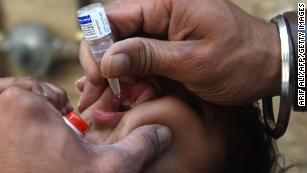
    Last month, a polio outbreak was confirmed in Papua New Guinea, which had been certified as polio-free in 2000, along with the rest of WHO's Western Pacific Region. Last year, two separate outbreaks of polio were reported in remote parts of the Democratic Republic of Congo. Another outbreak was confirmed in Syria.
    These outbreaks all involved circulating vaccine-derived polioviruses.
    Symptoms of polio, or poliomyelitis, include fever, fatigue, headache, vomiting, stiffness in the neck, pain in the limbs and, in a very small percentage of cases, paralysis, which is often permanent. There is no cure for polio, and it can be prevented only by immunization.
    Vaccine-derived polioviruses circulating have been rapidly stopped in the past with two to three rounds of immunization campaigns, according to WHO. So, for all polio outbreaks -- from a vaccine-derived virus or not -- the solution has been to immunize every child several times with the oral vaccine to stop transmission.
    Nigeria's fight against polio
    Nigeria's fight against polio 07:09
    "The eradication of the wild poliovirus is on track because we only have three countries where the wild virus still fights for survival: Pakistan, Afghanistan and Nigeria. I believe that we could very well eradicate the virus very soon," Zaffran said.
    "In terms of these outbreaks caused by the vaccine-derived viruses, this can only be stopped when we stop altogether using the vaccine, and we will not stop using the vaccine until we have eradicated the wild virus. So it's a chicken and egg situation," he said. "But we first need to eradicate the wild virus. After that, we will actually withdraw globally the use of the oral polio vaccine."
    Vaccine-derived polioviruses circulate when routine immunization efforts are poorly conducted, leaving a community susceptible to any poliovirus, whether vaccine-derived or wild.
    Experts tend to agree that the problem is not with the vaccine itself but rather low vaccination coverage, as a fully immunized community would be protected against both vaccine-derived and wild polioviruses, according to WHO.
    "That's why the world needs to continue its efforts until the very end," Zaffran said. "We cannot stop our efforts now."
    Polio rises from the grave
    Polio rises from the grave01:24
    In 1988, there were an estimated 350,000 cases of polio in more than 125 endemic countries worldwide. Last year, there were only 22 reported cases in two endemic countries: Pakistan and Afghanistan
    Since 2000, more than 10 billion doses of the oral polio vaccine have been administered to nearly 3 billion children worldwide, preventing more than 13 million cases of polio, according to WHO.
    During that time, 24 vaccine-derived poliovirus outbreaks occurred in 21 countries, resulting in fewer than 760 vaccine-derived poliovirus cases.
    "The countries that have had problems have been the countries where the vaccination levels are extremely low, either because of ongoing infrastructure issues or, more commonly now, because areas of conflict don't have the necessary infrastructure to vaccinate," said Dr. Yvonne Maldonado, a professor of pediatrics at the Stanford University School of Medicine and chief of pediatric infectious diseases at Lucile Packard Children's Hospital at Stanford, who has studied poliovirus.
    "We're almost ready to declare that we have eliminated wild polio, and these other cases, the vaccine-derived cases, are viruses that have been sitting around for months and years," she said. "If we continue to keep our vaccination levels high in all countries until we know polioviruses are all gone, then we should not see more cases."

    The oral vaccine's catch-22

    Some countries no longer use the oral vaccine and have switched to what's called the inactivated polio vaccine, developed by Dr. Jonas Salk and made available in the United States in 1955.
    The inactivated vaccine contains killed versions of wild-type poliovirus strains, doesn't pose the small risk of an outbreak and can be administered with a shot in the arm or leg. The inactivated vaccine is the only polio vaccine given in the US since 2000.
    Busting common myths about vaccines
    Busting common myths about vaccines 05:20
    The oral poliovirus vaccine -- which contains live weakened versions of the virus and can be administered through liquid in the mouth -- is the predominant vaccine used in many countries to eradicate polio. Unlike the Salk vaccine, it's the only one that can both protect individuals and block person-to-person transmission of the virus.
    The vaccine was developed by Dr. Albert Sabin and approved for use in the US in 1961.
    "The live virus vaccine is still in use for two reasons," said Maldonado, who sits on the American Academy of Pediatrics' Committee on Infectious Diseases.
    "One is because it is much cheaper," she said. "Secondly, the manufacturers are really trying to ramp up production of the killed vaccine. So as soon as they get enough vaccine, they're hoping that all countries will be using the killed vaccine, and eventually the plan is to try to switch over to only using killed vaccine."
    Bill Gates pledges $450 million to fight polio
    Bill Gates pledges $450 million to fight polio 03:18
    The inactivated vaccine is more than five times more expensive than the oral vaccine, which could cost a country only about 12 to 18 cents per dose when procured through UNICEF. The inactivated vaccine can cost about $1 per dose for a 10-dose vial or $1.90 per dose for a five-dose vial, according to a 2014 UNICEF document.
    The inactivated vaccine induces lower levels of immunity specifically in the intestines, where the poliovirus resides in most cases, compared with the oral vaccine. This type of immunity is called mucosal immunity.
    As a result, when a person immunized with the inactivated vaccine is infected with wild poliovirus, the virus could still multiply inside the intestines and spread to other people through that person's feces -- even though the person shows no signs of infection.

    'So what do we need? Another vaccine'

    The typical route of infection is by ingesting the virus, for instance if a person touches an object contaminated with feces and then touches their mouth.
    The virus can live in an infected person and be excreted in feces for many weeks and contaminate food and water in unsanitary conditions, according to the US Centers for Disease Control and Prevention.

    "If I get this inactivated polio vaccine and somehow I get infected, I would not know that I got infected because I am completely protected, but I will act as a vector, transmitting this virus almost at the same rate as if I had no vaccination," said Raul Andino, professor of microbiology and immunology at the University of California, San Francisco, whose lab has been studying poliovirus.
    "It's very effective to prevent disease, but it's not effective to prevent spread from people to people," he said of the inactivated vaccine.
    On the other hand, Andino pointed out that with the oral vaccine, you risk seeing live vaccine-derived viruses circulating in under-vaccinated communities.
    "So what do we need? Another vaccine," he said. "A vaccine that induces mucosal immunity and at the same time is safe."
    Follow CNN Health on Facebook and Twitter
    See the latest news and share your comments with CNN Health on Facebook and Twitter.
    Andino led a study published last year in the journal Cell that described exactly how vaccine-derived polioviruses replicate, regain virulence and lead to outbreaks.
    This new insight into the specific pathway in which vaccine-derived polio outbreaks occur could help in the development of improved vaccines.
    For instance, the finding could help predict whether a live attenuated vaccine candidate could revert to a pathogenic form, possibly triggering an outbreak, Andino and his co-authors wrote in the study.
    "We need to improve the technology, because clearly, this is a problem," Andino said. "Hopefully, this is going to be happening in the next few years."

    मंगलवार, 10 जुलाई 2018

    Earth’s Species are Now Going Extinct 1,000 Faster than Baseline Rate


    Technology Org logo

    Variation (from individual genes to species) makes ecosystems more resilient to change and provides innumerable benefits to both humans and other animals that share the planet with us. And while some environmental degradation can be reversed, the loss of variety – in this case, the extinction of species – is final.
    Problem is, animal species are now going extinct a lot faster than ever before: “[…] fossil records show that current extinction levels are around 1,000 times the natural background rate. They are exacerbated by habitat loss, hunting, climate change and the introduction of invasive species and diseases,” write Elizabeth Boakes and David Redding in an article for The Conversation.
    Elizabeth Boakes is a Teaching Fellow in Biodiversity and Environment Research at UCL, and David Redding – a Research Fellow at the same institution.
    Needless to say, the current rate of extinction is far and away what could be considered to be a perfectly healthy, albeit somewhat distasteful, natural process which spurs evolutionary creativity by encouraging the development of new adaptations.
    Furthermore, it’s important to note that rather than striking at random, extinction disproportionately affects related species that perform similar functions. For this reason, the loss of a specific group of species (say, those responsible for pollination) could lead to disastrous consequences down the road.

    According to scientists, our fellow species are currently disappearing at an unprecedented rate, which does not bode well for the future of humanity if left unchecked. Image credit: pixnio.com, CC0 Public Domain.
    “Imagine a disease that only killed medical professionals – it would be far more devastating for society than one which killed similar numbers of people at random,” write Boakes and Redding.
    According to a study conducted by Malcolm L. McCallum, amphibians are some of the most rapidly disappearing animals on the planet, going extinct at a rate of up to 45,000 times above the background rate, which is in line with the finding that larger species are more prone to extinction than smaller ones.
    While moralising about the allegedly intrinsic value of biodiversity is not going to change the hearts and minds of those who face the attendant challenges on a daily level (think farmers and shepherds), nor is it a negative for humans when it comes to the eradication of dangerous viruses, the loss of species is, at the very least, a worthy topic for public discussion at a time of rapid climate change and resultant loss of biodiversity.
    Source: sciencealert.com.


    https://www.technology.org/2018/07/09/earths-species-are-now-going-extinct-1000-faster-than-baseline-rate/#

    बुधवार, 4 जुलाई 2018

    Organic Farmers: Growing America’s Health


    ELENABSL/SHUTTERSTOCK.COM
    When we think of scientists as men and women in lab coats peering into microscopes, what’s missing is farmers. Our society doesn’t tend to equate the two, yet farmers are active field scientists. How they choose to grow and produce food greatly impacts our shared environment of soil, water and air quality, as well as the nutritional content of food, and therefore, public health.  
    The best field- and lab-based scientists share key traits: they’re curious, keen observers and systems thinkers that learn by trial and error. Both formulate and test hypotheses, collect data, take measurements, assess results and draw conclusions.

    Field Science

    Diana Dyer, a registered dietitian and organic garlic farmer outside of Ann Arbor, Michigan, explains, “I like to help people see the similarities between the scientific process and good, careful farming—all aspects of which revolve around observations, goals, planning, implementation, intervention and analysis of results—then careful re-planning based on those results.”
    Dyer and her husband, Dick, started farming after long careers in traditional health care, where the focus was on treating people after they got sick. Through their farm work, they wanted to focus on prevention. “Growing healthy food in healthy soil, our goal was to create and nourish a healthy community from the ground up. Communicating the multiple benefits of healthy soils and ecosystems has been at the core of our vision and responsibility from day one,” she says.  The Dyers believe that flavor is key to eating and enjoying truly nourishing foods, and based on their professional health backgrounds and farming experience, they connect healthy soil with higher-quality, better-tasting food.
    In Havre, Montana, Doug Crabtree, and his wife, Anna, manage Vilicus Farms, featured in the book Lentil Underground: Renegade Farmers and the Future of Food in America, by Liz Carlisle. The Crabtrees grow organic heirloom and specialty grains, pulses and oilseed crops such as emmer, kamut, black beluga lentils and flax.
    Asked if he considers himself a scientist, Crabtree first defines the term as “a person who is studying or has expert knowledge of one or more of the natural or physical sciences.”  Then he replies, “Given this definition, how could any farmer not be a scientist? An organic farmer is a lifelong student of nature, seeking to emulate her wisdom and processes as we refine our production systems. Organic production isn’t just growing food without toxic chemical inputs, it’s a system that requires conscientiously improving soil, water and associated resources while producing safe and healthy food for America’s growing population of informed consumers.”

    Healthy Soil, Food and People

    At the Rodale Institute, in Kutztown, Pennsylvania, Andrew Smith directs the new Vegetable Systems Trial, a long-term, side-by-side comparison of both biologically organic and chemically based conventional vegetable production. An organic farmer with a Ph.D. in molecular ecology from Drexel University, in Philadelphia, Smith studies how soil quality and crop-growing conditions influence the nutrient density and health-protecting properties of specific vegetables.   
    “Over the past 70 years, there’s been a decline in the nutritional value of our foods,” reports Smith. “During this time, industrial agriculture, with its pesticides and synthetic fertilizers, increased yields and size of crops, but the tradeoff was a decline in nutrient content, known as the ‘dilution effect’.” In addition, Smith explains, greater levels of nitrogen fertilizer, typical of conventional production methods, may also increase a plant’s susceptibility to insects and disease.
    Smith’s research will give fellow farmers, healthcare providers and consumers a better understanding of how crop production practices influence soil quality and therefore, food quality. For example, research of organic crops shows higher levels of vitamin C; higher-quality protein; plus more disease-fighting compounds called secondary plant metabolites such as lycopene, polyphenols and anthocyanin, the plant pigment responsible for the red, blue and purple colors in fruits and vegetables, as reported in a meta-analysis published in the British Journal of Nutrition.
    The Rodale Institute has formed partnerships with nutrition and medical researchers at Pennsylvania State University, in University Park. Of particular interest, for example, are extracts from purple potatoes that show promise in helping to kill colon cancer cells. Smith looks forward to identifying growing methods that boost levels of anthocyanin, as well as other health-protecting compounds in crops.  
    The new Regenerative Health Institute, a global research and education center linking soil health to human health, will also be housed at the Rodale Institute. It’s a collaboration between Rodale staff and the Plantrician Project, a nonprofit organization in New Canaan, Connecticut, that promotes whole food and plant-based nutrition, and helps healthcare providers embrace food as medicine as the foundation of their practices.
    Jeff Moyer, a renowned international authority in organic agriculture and executive director of the Rodale Institute, explains, “It’s not only what you eat that’s important, but how what you eat was produced. Ultimately, our personal health is linked to the health of the soil.”
    David Montgomery, a professor of geomorphology at the University of Washington, in Seattle, has visited farms worldwide, witnessing how farmers use regenerative farming practices to bring degraded soil back to life. He learned that grazing animals, cover-cropping and no-till farming free of synthetic chemical fertilizers and pesticides protects and enriches the soil microbiome, which contributes to the nutrient density of plants and human health.
    Organic Farming

    We Are What We and Our Animals Eat  

    Along with our well-being, livestock farming methods impact our environment, too. A growing body of research including a new study published in Food Science & Nutrition shows that meat and dairy products from animals raised mostly on grass or pasture—as nature intended—contain significantly higher levels of conjugated linoleic acid and omega-3 fatty acids compared to grain-fed animals. These naturally occurring fats help protect us from inflammation, heart disease and cancer. Important in brain, eye and nerve development, omega-3 fatty acids are especially critical for pregnant and breastfeeding women and their infants.
    Organic farmers, by law, must provide their ruminant animals with significant time on pasture and may not feed them genetically engineered feed or feed produced with synthetic fertilizers and pesticides. Further, they can’t use synthetic hormones or antibiotics to promote weight gain. In these ways, organic farmers help protect our food, water, and environment from contamination, and reduce the growing global threat of antibiotic resistance.
    Randolph Center, Vermont, dairy farmers Regina and Brent Beidler diligently study and question changes they witness in their immediate environment. They monitor what grows in their pasture, watch what their cows choose to eat and count the numbers and activities of insects, bees, worms, birds and wildlife. They understand that careful land and animal stewardship is key to soil, plant, animal and human health.

    Healing Communities

    More hospitals nationwide are investing in farms and farmers’ markets to boost patient, employee and community health by increasing access to nutrient-dense, fresh, healthful food. One exceptional example is the new partnership between Virginia’s Allegheny Mountain Institute (AMI) and Augusta Health, an independent, community-owned nonprofit hospital in Augusta County, Virginia.  
    The AMI Fellowship program prepares individuals to become farmers, teachers and ambassadors for health-promoting food systems. “Both AMI and Augusta Health believe that access to excellent health care includes access to healthy food,” explains Sue Erhardt, the institute’s executive director.
    The AMI Farm at Augusta Health initiative will create an onsite production farm and a community venue for food, nutrition and gardening education. Their goal is to tackle three major local health issues: poor nutrition, low physical activity and overweight; diabetes; and mental health. A Food Farmacy program for those with or at risk for Type 2 diabetes will provide fresh produce prescriptions at an onsite farmstand, as well as cooking classes.
    Erhardt recalls her life-changing experience as a teen, hearing American labor leader Cesar Chavez speak about farm worker exposure to pesticides and related cancer clusters. She’s proud to say, “The farm project will exemplify sustainable practices for growing vegetables, including organic four-season crops and companion planting, while promoting soil health.
    “We believe this project will promote a better quality of life for staff, patients and community members.” That’s the power of farming when it’s dedicated to optimum health.

    Melinda Hemmelgarn is a registered dietitian, writer and Food Sleuth Radio host with KOPN.org, in Columbia, MO. Connect at FoodSleuth@gmail.com.

    बुधवार, 9 मई 2018

    राहुल (गांधी ?)द्वारा सपना देखने पर आश्चर्य कैसा ?

    कौन कहता है के सपनों को न आने दें हृदय में ,

    देखते सब हैं इन्हें अपनी उमर अपने समय में। 

    राहुल (गांधी ?)द्वारा सपना देखने पर आश्चर्य कैसा ?जो व्यक्ति ढंग से राजनीतिक टिप्पणी नहीं कर सकता था और अक्सर संविधानिक पत्र को भी फाड़ देता था। आज वह शख्श संविधान प्रदत्त प्रक्रिया के तहत प्रधानमन्त्री बन जाने का स्वप्न ले रहा है। आखिर स्वप्न देखने से कौन किसको रोक सकता है। इसी विषय पर मैंने जब अपना कौतुक प्रकट करते हुए डॉ. वागीश मेहता (राष्ट्रीय विचारक ,भारत धर्मी समाज से )पूछा ,उन्होंने किसी प्रसिद्ध कवि की उक्त पंक्तियाँ उद्धृत कर दी। ये वही  शख्श है जिसने अपनी ही सरकार के संविधानसम्मत निर्णय को फाड़ के फेंक दिया था। और अब यही हाईकमान बना व्यक्ति सांसदों के प्रधानमन्त्री चुनने के निर्णय पर अग्रिम डाका डाल रहा है। वंशवाद का खूंटा उखड़ गया बछड़े की अकड़ न गई।  

    शनिवार, 5 मई 2018

    'हाथ का पुर्जा "-कविता: डॉ वागीश मेहता ,राष्ट्रीय विचारक भारत धर्मी समाज

    'हाथ का पुर्जा "-कविता: डॉ वागीश मेहता ,राष्ट्रीय विचारक भारत धर्मी समाज 

                              (१ )

    गिर गया हाथ से पुर्जा तो ,तेरी तक़रीर का क्या होगा ,

    इस देश की संवरे न संवरे ,तेरी तकदीर का क्या होगा। 

    आस्तीन चढ़ा लेने भर से ,कोई देश कभी न चला करता, 

    गर पले सांप आस्तीनों में ,फिर हाथ लकीर का क्या होगा।  


                                (२ )

    ये भारत है कोई इंडया नहीं ,नहीं टुकड़ा कोई धरती का ,

    यह स्वयं धरित्री धारक है ,है पुण्य धाम मानवता का। 

    पंद्रह मिनिट का नाटक कर , कर्नाटक हासिल क्या होगा ,

    निर्णय फाड़े काग़ज़ फेंके ,अब पहन  जनेऊ  क्या होगा। 

                                (३)
    बिन अनुभव की आंच तपे ,सिर पर गर ताज़ सज़ा तो क्या ,

    जब वाह -वाही भट भाट  करें ,फिर किसी की सूझ सलाह ही क्या। 

    ग़र भारत भाव नहीं जाना ,योरुप इतिहास पढ़ा तो क्या ,

    फिर वज्र सरीखी दिल्ली में ,तेरी तदबीर का क्या होगा। 

    प्रस्तुति :वीरुभाई (वीरेंद्र शर्मा ,एचईएस -वन ,सेवानिवृत्त )

    सोमवार, 19 फ़रवरी 2018

    एतदद्योनीनि भूतानि सर्वाणीत्युपधारय | अहं कृत्स्नस्य जगत : प्रभव : प्रलयस्तथा ||

     एतदद्योनीनि भूतानि सर्वाणीत्युपधारय | 

    अहं कृत्स्नस्य जगत : प्रभव : प्रलयस्तथा ||   

    सम्पूर्ण प्राणियों के  उत्पन्न होने में अपरा और परा -इन दोनों प्रकृतियों का संयोग ही  कारण  है -ऐसा तुम समझो। मैं सम्पूर्ण जगत का प्रभव तथा प्रलय हूँ। 

    व्याख्या : अनंत ब्रह्माण्डों में स्थावर -जंगम ,थलचर -जलचर-नभचर ,जरायुज -अंडज -स्वेदज -उद्भिज्ज ,मनुष्य ,देवता ,गंधर्व ,पितर ,पशु ,पक्षी ,कीट ,पतंग आदि जितने भी प्राणी देखने -सुनने -पढ़ने में आते हैं ,वे सब अपरा और  परा -इन दोनों के माने हुए हुए संयोग से ही उत्पन्न होते हैं। अपरा और परा का संयोग ही सम्पूर्ण  संसार का बीज है। 

    मैं सम्पूर्ण जगत का प्रभव तथा प्रलय हूँ -इससे   भगवान् का तात्पर्य है कि  मैं ही सम्पूर्ण संसार को उत्पन्न करने वाला हूँ और मैं ही उत्पन्न होने वाला हूँ ,मैं ही नाश करने वाला और मैं ही नष्ट होने  वाला हूँ ; क्योंकि मेरे सिवाय संसार का अन्य कोई भी कारण तथा कार्य नहीं है। मैं ही इसका निमित्त(Intelligent or Efficient Cause ) और उपादान कारण (Material Cause ) हूँ। 

    भगवान् ही जगद रूप से प्रकट हुए हैं। यह जगत भगवान् का आदि अवतार है -'आद्योवतार :   पुरुष : परस्य '(श्रीमद्भगवद्गीता २/६ /४१ ) .आदि  अवतार    होने से जगत नहीं है ,केवल भगवान् ही है।

    शनिवार, 17 फ़रवरी 2018

    उद्धरेदात्मनात्मानं नात्मानमवसादयेत | आत्मैव ह्यात्मनो बन्धुरात्मैव रिपुरात्मन : ||

    उद्धरेदात्मनात्मानं   नात्मानमवसादयेत | 

    आत्मैव ह्यात्मनो बन्धुरात्मैव  रिपुरात्मन :  || 

    अपने द्वारा अपना उद्धार करें , अपना पतन न करें क्योंकि आप ही अपना मित्र हैं  और आप ही अपना शत्रु हैं । 

    व्याख्या :गुरु बनना या बनाना गीता का सिद्धांत नहीं है। वास्तव में मनुष्य आप ही अपना गुरु है। इसलिए अपने को ही उपदेश दे अर्थात  दूसरे में कमी न देखकर अपने में ही कमी देखे और उसे मिटाने की चेष्टा करे। भगवान् भी विद्यमान हैं ,तत्व ज्ञान भी विद्यमान है और हम भी विद्यमान हैं ,फिर उद्धार में देरी क्यों ? नाशवान व्यक्ति ,पदार्थ और क्रिया में आसक्ति के कारण ही उद्धार में देरी हो रही है। इसे मिटाने की जिम्मेवारी हम पर ही  है ; क्योंकि हमने ही  आसक्ति की है। 

    पूर्वपक्ष: गुरु ,संत और  भगवान् भी तो मनुष्य का उद्धार करते हैं ,ऐसा लोक में देखा जाता है ?

    उत्तरपक्ष : गुरु ,संत और भगवान् भी मनुष्य का तभी उद्धार करते हैं ,जब वह (मनुष्य )स्वयं उन्हें स्वीकार करता है अर्थात उनपर श्रद्धा -विश्वास करता है ,उनके सम्मुख होता है ,उनकी शरण लेता है ,उनकी आज्ञा का पालन करता है। गुरु ,संत और भगवान् का कभी अभाव नहीं होता ,पर अभी तक हमारा उद्धार नहीं हुआ तो इससे सिद्ध होता है कि हमने ही उन्हें स्वीकार नहीं किया। जिन्होनें उन्हें स्वीकार किया उन्हीं का उद्धार हुआ। अत : अपने उद्धार और पतन में हम ही हेतु हुए।